



Application of hollow sheet in advertising field
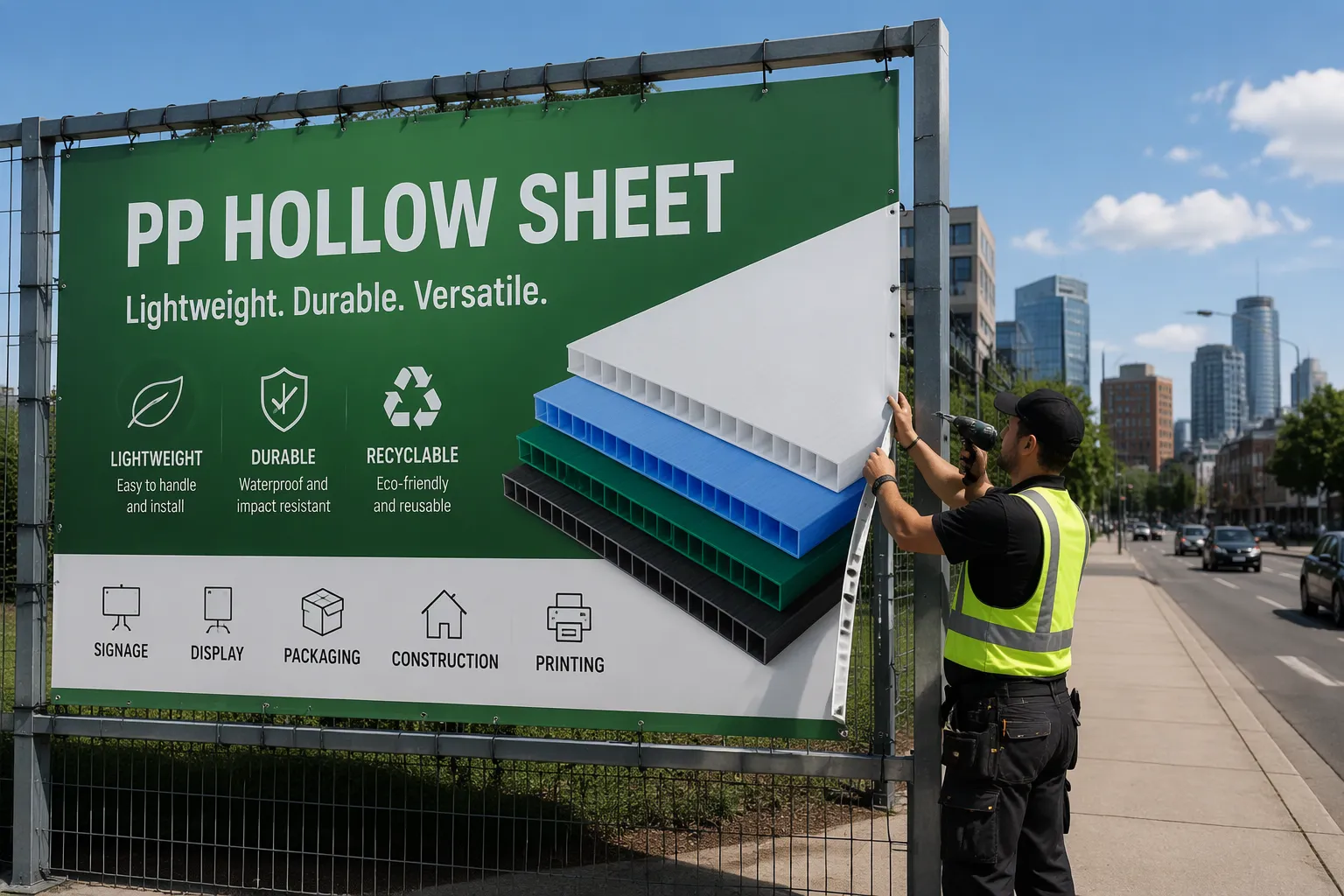
PP hollow sheet serves the advertising field through yard and outdoor signage, retail display and POS fixtures, billboards, promotional and event boards, light boxes, and shaped cutout graphics. These are the common signage and display applications buyers ask about most often.
Advertisers choose the material for practical reasons. It is lightweight yet rigid, waterproof, printable, reusable, and recyclable. Those traits suit short campaigns and repeated installations alike.
Each application below gets a closer look. Performance, cost, and compliance follow, so buyers can judge where PP hollow sheet fits in their advertising programs.
Key Takeaways
PP hollow sheet suits many advertising formats, from yard signs to billboards. Material fundamentals are covered in this corrugated PP sheet guide.
The material is lightweight yet strong, making it easy to carry and install.
It is waterproof and weather-resistant, so it holds up outdoors in rain and sun.
You can print on it with screen, digital, or UV printing methods.
It is reusable and recyclable, which saves money and reduces waste.
PP hollow sheet typically costs less over time than cardboard because it lasts longer.
For indoor displays, specify a flame-retardant grade to meet venue safety rules.
Buyers should confirm print quality and compliance documents before ordering in bulk.
Signage and Outdoor Advertising
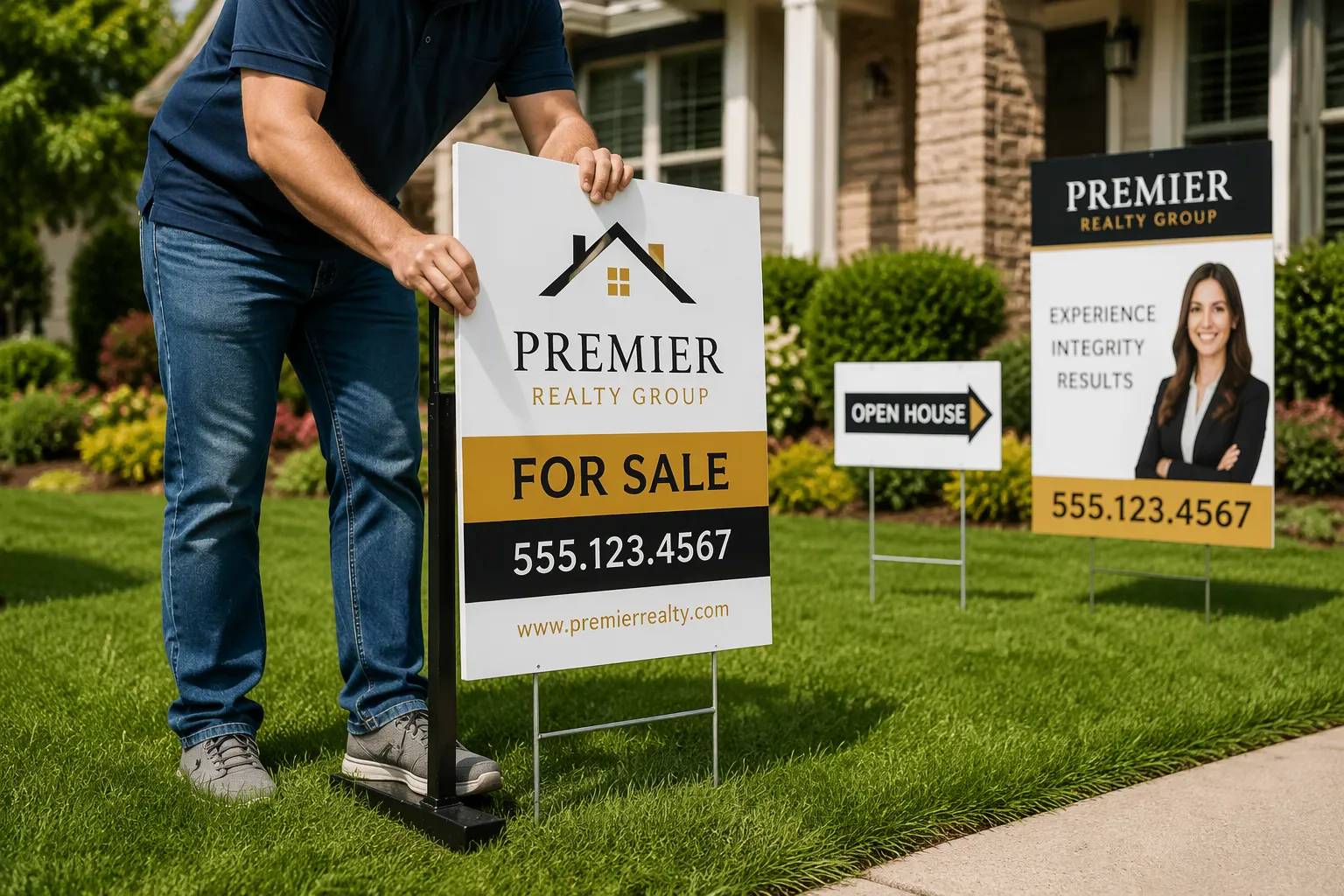
Outdoor advertising puts a substrate through rain, wind, and sunlight. PP hollow sheet handles these conditions well, and the 5mm PP hollow sheet for advertising signs remains a practical choice for temporary and semi-permanent outdoor work.
Yard Signs and Portrait Boards
A 4mm sheet is the common grade for short-term yard signs and portrait boards. Other stock thicknesses, from 3mm up to 5mm, let larger or stiffer boards reach the rigidity they need: 3mm suits small lightweight panels, while 5mm suits wide faces and high-wind positions. Standard 1220 x 2440mm sheets or cut-to-length sizes simplify job planning, and the smooth surface accepts screen, digital, and UV printing without special surface treatment. The PP hollow sheet specifications for thickness, width, and grade options set the practical limits of each format.
Real Estate, Political, and Event Signs
Real estate agents, political campaigns, and event organizers rely on these boards because they install fast and survive weather. Common yard sign sizes include 18 by 12, 24 by 18, and 36 by 24 inches, with 24 by 18 inches a frequent choice for real estate listings. Rigid panel signs run larger, at 18 by 24, 24 by 36, and 48 by 36 inches. A 4mm sheet is enough on an H-stake, and the material stays light enough for one person to carry a stack.
Stake Compatibility and Print Methods
H-stakes and step stakes fit the fluted channels of standard boards, so crews need no special tools. Print shops choose among three methods: direct UV flatbed printing for photographic short-to-mid runs, screen printing for high-volume one-to-three-color jobs, and mounted vinyl for specialty finishes. Ink adhesion matters more than the print itself on this non-porous surface, so buyers should confirm the printer has experience with fluted polypropylene.
Directional and Wayfinding Signage
Wayfinding boards carry arrows, maps, logos, and safety messages. PP sign boards suit this role because they stay readable in damp conditions and resist scuffing in high-traffic areas. Event venues, campuses, and construction sites use them for temporary routes that change often; the trade-offs of the material are set out in these PP sign board pros and cons.
Temporary vs. Semi-Permanent Outdoor Use
Temporary wayfinding covers a weekend or a season. Semi-permanent installations may run a year or more. The same sheet serves both, but the grade and mounting method should match the intended duration. For longer service, specify a UV-stabilized grade and a secure frame or post mount.
Weather and UV Performance
PP hollow sheets are waterproof, and they hold up better than cardboard in humid or rainy outdoor advertising environments. Cardboard absorbs moisture and loses strength; plastic sheds water and keeps its shape. Plastic boards also last considerably longer outdoors and can be reused multiple times, while cardboard is cheaper initially but offers worse long-term value.
UV-Resistant Grades and Outdoor Lifespan
Standard grades fade and embrittle under direct sun. Supplier-published figures differ widely: untreated sheet is usually quoted at roughly 6 to 24 months of continuous outdoor exposure, while UV-stabilized or UV-coated grades are quoted at 18 months to more than three years, with some suppliers claiming 36 to 48 months. The spread reflects grade, colour, climate, and mounting method, so buyers planning long-term outdoor signage should specify a UV-stabilized grade and treat the figures as planning guides rather than guarantees. For any board used in strong sun, UV stabilization is usually the decisive specification.
Specifying Sheet for Yard Signs, Wayfinding or Billboard Faces?
Request thickness options, grade data, and A4 samples for the specific format before campaign artwork is finalized.
Retail Display and POS Advertising
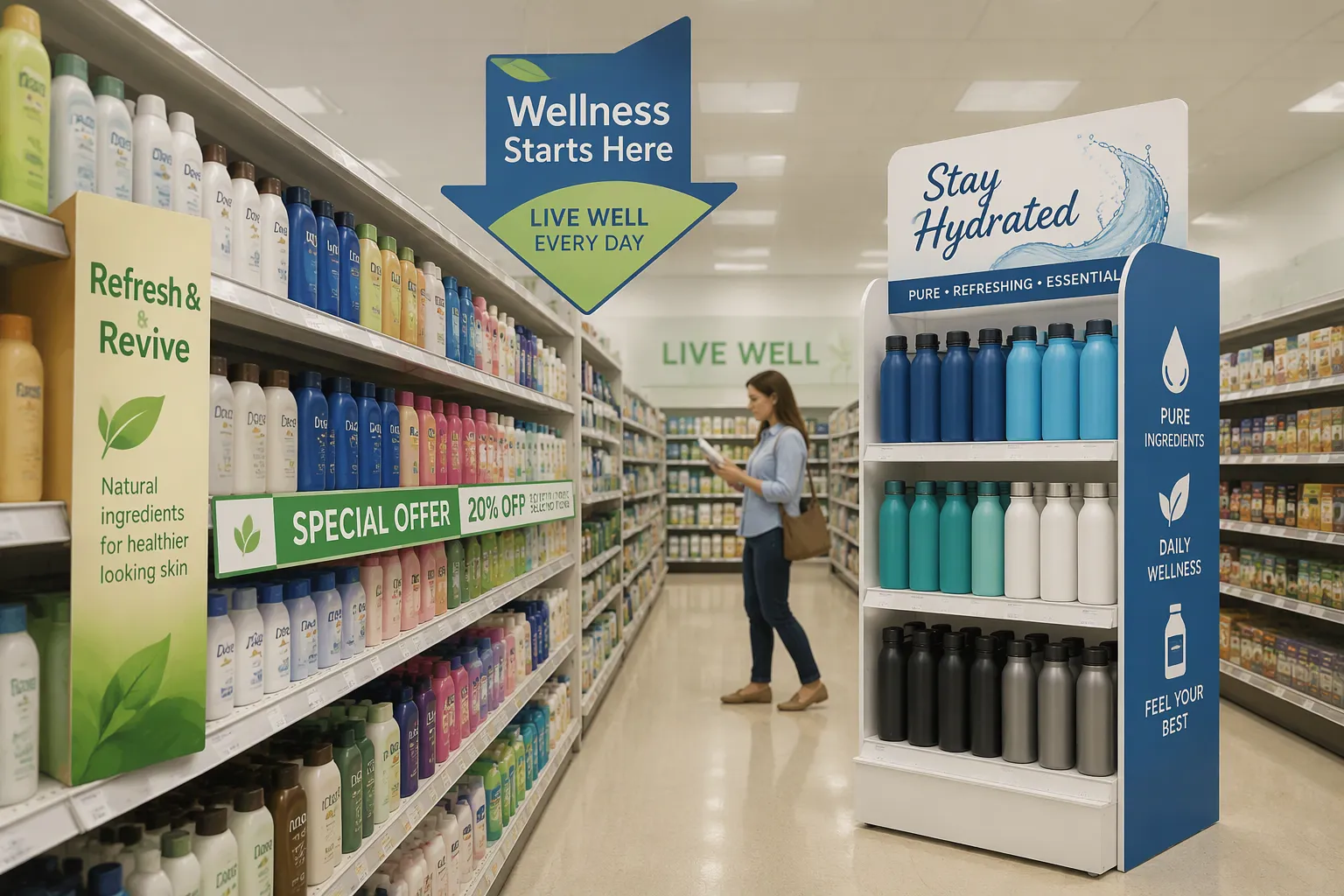
Retail environments depend on fixtures that grab attention, hold products, and survive daily handling. PP hollow sheet fits this role well. Common fixtures include POP spray painting, display boxes, display racks, and spray-painting shelves. Each one turns a plain sheet into a working piece of the advertising and retail industry.
Shelf Talkers and Aisle Signage
Shelf talkers and aisle signs guide shoppers and highlight promotions. A thin PP flute sheet works well here because it stays flat, holds print cleanly, and mounts with tape, clips, or small brackets. Store teams can swap these pieces quickly when a promotion ends.
Die-Cutting and Custom Shapes
Standard rectangles cover many jobs, but custom shapes set a display apart. Two core techniques do most of the work. Through cuts slice completely through the material, and both digital cutters and traditional dies can perform them depending on thickness and volume. Creasing forms a fold line without cutting through, which digital cutters handle through adjustable pressure and dies handle with the right rule type.
Digital cutting suits prototyping and short runs. CNC routing or digital knife cutting allows precise shapes and stake slots to be cut directly from a design file, with no tooling cost. Die cutting becomes the standard approach for production runs, especially high-volume identical pieces. The upfront tooling cost is offset by faster cutting speeds and lower per-unit costs once the design is finalized. Corrugated plastic die cutting suits complex, customized shapes with high precision. Common finishing options include die-cutting for shapes beyond a standard rectangle, hole punching and grommets for hanging or zip-tying, H-stake slots, and frame mounting for trade-show and retail display use.
Display Boxes, Racks, and Floor Stands
Display boxes, racks, and floor stands carry products and brand messages at the same time. The hollow structure allows flexible structural design without injection molds. That makes custom display shapes practical for short runs, where a molded fixture would cost far more to develop. Colors can be customized, and surfaces accept printing or lamination.
Base Options and Load Limits
A floor stand needs a stable base. Designers can fold the sheet into a weighted base, add a separate ballast panel, or combine the board with a heavier foot. Load limits depend on sheet thickness, span, and joint design rather than a single fixed number. Buyers should test a prototype under real product weight before committing to a production run.
Print Finishes for Retail
Surface finish shapes how shoppers read a display. A matte surface reduces glare under store lighting and suits text-heavy pieces. A gloss finish adds depth to vibrant, full-color designs and draws the eye. Lamination adds a protective layer that resists scuffing and moisture during handling and transport.
Matte, Gloss, and Lamination Options
Printing method and finish should match the fixture's job. Screen printing suits high-volume single-color work, while digital and UV printing handle photographic graphics and short runs. Lamination protects custom-printed displays that travel between stores or return to storage. Buyers should confirm ink adhesion on the non-porous surface before approving a full run.
Billboards and Large-Format Boards
Large-format work pushes any substrate to its limits. Temporary billboards, transit panels, and oversized campaign faces all demand flatness, stiffness, and a printable surface at scale. PP hollow sheet meets these demands for short-life and portable formats.
Temporary and Portable Billboard Faces
A large PP hollow board face works well for campaigns that run weeks or months. Crews mount the panels to a timber or metal frame, then brace the frame against wind load. The sheet stays flat across wide spans and sheds rain without swelling.
Sheet width sets the main planning limit. On standard production the maximum width is 2000mm, and standard sheets measure 1220 x 2440mm. Cut-to-length service removes the length constraint, so height is flexible while width is not. Designers should plan panel layouts around the 2000mm ceiling from the start.
Splicing and Seaming Oversized Graphics
Faces wider than 2000mm require joining. Printers split the artwork into panels, print each one, then align the seams during installation. A backing batten behind each joint keeps the panels flush and stops edge lift. Seam placement should fall on a quiet area of the graphic, away from faces and text.
Transit and Mobile Advertising Boards
Mobile formats include vehicle panels, trailer signs, and portable display boards. These boards must stay light, because extra weight affects mounting hardware and fuel use. PP hollow boards carry graphics without adding meaningful load.
Mounting Methods for Vehicle and Trailer Signs
Crews fix panels with frames, edge trim, or removable brackets. Removable mounts suit campaigns that rotate between vehicles. Buyers should confirm the mounting method with the fabricator before printing, since hardware placement affects the layout.
PP Hollow Boards vs. Other Substrates
Each substrate has a natural home. Vinyl suits curved surfaces and wrap applications. Foam board fits short indoor runs and lightweight displays. Aluminum composite serves long-life permanent billboards. PP hollow sheet covers the middle ground: outdoor billboards and yard signs that need weather resistance, rigidity, and reuse at moderate cost.
Vinyl, Foam Board, and Aluminum Composite
Vinyl offers flexibility and conforms to complex shapes. Foam board delivers a smooth, lightweight face for indoor work. Aluminum composite provides long service life and a premium finish for permanent structures. PP hollow sheet competes on balanced performance: waterproof, printable, reusable, and light enough for one person to handle. Buyers with mixed programs often stock more than one substrate, and each one earns its place.
Two sheet grades cover most large-format and display work in this category.

5mm White PP Hollow Sheet for Advertising Signs
White twin-wall sheet at 5mm for yard signs, portrait boards, and short-run campaign faces, supplied in 1220 x 2440mm or cut-to-length sizes.
View Product
6mm Twin Wall Polypropylene Sheet
Heavier 6mm twin-wall sheet for wide panels that need extra stiffness, and for reusable packaging and dividers.
View ProductPromotional Boards and Event Graphics
Event work rewards materials that travel well and set up fast. PP hollow sheet covers light boxes, window modeling, and shaped cutout graphics, along with trade show and campaign boards. Each format shares one trait: the board must look sharp on opening day and survive the trip home. A broader view of PP hollow sheet in signage and advertising shows where these formats sit alongside packaging and industrial uses.
Trade Show and Exhibition Displays
Booth builders favor these boards for portable displays. The lightweight nature of PP hollow sheet makes it well suited to displays used at trade shows, exhibitions, and events. Crews transport and set up the boards with less effort, and installation costs drop as a result. The sheets stay sturdy enough to hold their shape and support design elements, which suits pop-up stands and temporary promotional displays.
Reusable Modular Display Systems
Modular systems break a booth into panels that pack flat and rebuild in a new hall. The material accepts vibrant, high-quality graphics printed directly on the surface, so each panel doubles as a branded wall. Fabricators can also form curved sections and add inserts. That flexibility supports modular displays in busy retail and event environments.
Campaign and Seasonal Promotions
Seasonal campaigns run on tight timelines and modest budgets. Compared with metal or acrylic, PP hollow sheets cost less while still offering durability and reasonable surface finish. Brands can stretch a marketing budget without losing impact. Short-run boards also let teams test a message in a few stores before a wider rollout.
Short-Run Promotional Boards
Short runs suit digital printing, which needs no expensive tooling. A retailer promoting a holiday sale can order a small batch of shaped cutouts and window pieces, then reorder only if the campaign performs. This approach keeps temporary promotional materials affordable and keeps waste low.
Reuse, Cleaning, and Storage
Reusability separates these boards from one-time paper displays. A damp cloth removes dust and fingerprints, and the waterproof surface resists staining. Teams can clean a set after each event, stack it, and store it until the next show. Repeat campaigns then need fewer replacements, and the same graphics serve multiple venues.
Stacking and Storage Best Practices
Store boards flat on a pallet or shelf rather than leaning at an angle that bows the panel. Place a protective layer between sheets to guard printed faces from scuffs. Keep the stack dry and out of direct sun. For indoor event displays where fire-rating considerations apply, flame-retardant grades are available; buyers should request documentation for the specific grade.
Planning Retail Fixtures, Trade Show Panels or Seasonal Cutouts?
Compare grades and finishing options for shelf talkers, floor stands, and rebuildable modular panels, and check substrate alternatives before fixing a budget.
Why PP Hollow Sheet Performs in Advertising
Lightweight Strength and Rigidity
The twin-wall structure explains much of the material's behavior. Two flat skins sandwich a fluted core, and that core reduces the amount of material needed while keeping useful rigidity and mechanical strength. A PP hollow sheet therefore carries a high strength-to-weight ratio without the bulk of a solid board. The construction is described in general terms in this background on how corrugated plastic panels are built.
Strength-to-Weight and Handling Benefits
Handling and installation costs drop when crews move lighter boards. PP hollow boards are easier to handle, transport, cut, and install than many heavier solid boards. The hollow structure delivers strength and low weight together, so one person can carry and position a panel. The sheet is also non-toxic, odorless, moisture-proof, corrosion-resistant, and shockproof, and standard tools cut, drill, and shape it. Antistatic and conductive variants exist as specialized options, with surface resistivity controlled between 10^6 and 10^11 for antistatic grades and between 10^3 and 10^5 for conductive grades; neither is a standard advertising grade.
Printability and Surface Quality
Print quality depends on surface energy as much as on the press. Untreated polypropylene is generally rated poorly for screen-printing ink adhesion, which is why preliminary tests are advisable on any new batch. Corona treatment raises surface energy, and treated sheet is reported to improve ink adhesion, give more consistent print quality, and reduce ink peeling before UV and other printing jobs.
Screen, Digital, and UV Printing
Buyers should confirm treatment before approving artwork. A treated polypropylene hollow board supports high-quality printing across screen, digital, and UV methods, while an untreated sheet may scratch or peel. The smooth face also accepts lamination for extra protection.
Moisture, Chemical, and Impact Resistance
Water is the common enemy of paper-based signage. PP corrugated board keeps its structural integrity in humidity, rain, and chemical spills, and its non-porous surface repels water, oils, and most common chemicals. Published test data put water absorption for polypropylene below 0.01% over 24 hours, so dimensions and mechanical properties stay consistent in wet conditions.
Humid, Rainy, and High-Traffic Environments
Chemical resistance covers everyday cleaning and outdoor exposure. Polypropylene resists most acids, alkalis, alcohols, and salt solutions at room temperature, though strong oxidizing agents and aromatic solvents can attack it. Impact performance holds up too: impact copolymer grades are reported to resist hard hits without cracking down to about –22°C. That combination suits rainy storefronts, busy concourses, and reusable event boards.
Cost and Material Comparison
Budget decides many advertising programs. PP hollow sheet earns its place as a cost-effective, durable, and highly customizable alternative for eye-catching signage and displays. Buyers who compare substrates on purchase price alone miss the bigger picture.
Cost per Square Foot vs. Alternatives
Purchase price per square foot varies with thickness, grade, and order volume. PP hollow sheet sits in the affordable middle of the substrate range. Foam board costs less per sheet but suits only short indoor runs. PVC and acrylic carry higher prices and serve premium, long-life fixtures. Aluminum composite costs the most and fits permanent billboards.
Foam Board, PVC, Acrylic, and Aluminum Composite
Each material has a natural home. Foam board fits lightweight indoor displays and one-time events. PVC offers a dense, smooth face for premium retail fixtures. Acrylic delivers clarity and depth for light boxes and shaped pieces. Aluminum composite provides rigidity and long service for permanent structures. PP hollow sheet covers outdoor and indoor work that needs weather resistance, printability, and reuse at moderate cost. A supplier may stock every option, so the right choice depends on the job, not on rank.
Total Cost of Ownership
Purchase price tells only part of the story. PP corrugated plastic costs more upfront than cardboard, yet its durability, moisture resistance, and reusability support a lower total cost of ownership over time. Fewer replacements, less product damage, and lower disposal costs drive the savings.
Reuse Cycles and Replacement Frequency
One supplier comparison puts cardboard at 1 to 2 uses against 50 or more cycles for PP Corflute, a lifespan roughly 25 times longer. The same five-year model for 1,000 units comes to $18,500 for cardboard and $9,200 for PP Corflute. A second supplier advises comparing cost per completed trip rather than purchase price: a $4 reusable pad that completes 40 cycles costs $0.10 per cycle, and added expenses of $0.08 per cycle bring the total to about $0.18. Those figures are illustrative supplier models, not market quotations. Procurement teams sourcing in volume should confirm the minimum order quantity of 500 sheets and request A4 samples before placing a wholesale price order. Grade and thickness choices feed directly into those reuse numbers, and the 2026 market outlook for PP hollow sheet covers how supply and pricing have moved.
Matching Material to Campaign
Campaign length, budget, and environment set the shortlist. A weekend sale favors foam board or a thin sheet. A rainy outdoor season favors waterproof stock. A permanent billboard favors aluminum composite.
Campaign Length, Budget, and Environment
Short campaigns reward low upfront cost. Long campaigns reward durability and reuse. Humid or rainy sites rule out paper-based boards. Buyers can specify custom sizes, thicknesses, colors, and printing options to match each format, from a retail display to an outdoor sign. That flexibility keeps one material useful across a mixed advertising calendar.
Compliance and Sustainability
Advertising programs increasingly face procurement rules on waste, fire safety, and ink emissions. PP hollow sheet can address each point, and buyers can document compliance with the right supplier.
Recyclability and Recycled Content
PP hollow sheet can be recycled, and it carries the resin identification code 5 for polypropylene. How the material is collected varies by region: many municipal programs accept only bottles and containers, while industrial and commercial streams handle sheet and offcuts. Brands that run take-back programs can collect used boards after a campaign and route them into a stream that accepts them.
Recycling Streams and Material Recovery
Material recovery depends on clean sorting. Crews should remove stakes, grommets, and vinyl overlays before baling the boards. Clean sheets grind into flake that processors reuse in new plastic products. Buyers should ask suppliers for recycled-content options and confirm the recycling pathway in their region, since local recycling programs differ in what they accept. Sustainability here is a practical advantage, not a reason to dismiss other substrates.
Flammability and Indoor Safety
Indoor displays often fall under fire-rating rules for public venues. Standard PP hollow sheet burns, so specifiers should choose a flame-retardant grade when a venue requires one. The grade is an option, not a default.
Flame-Retardant Grades for Indoor Displays
Flame-retardant grades are formulated to stop burning soon after the ignition source is removed. Suppliers test these grades against the UL 94 flammability standard. Under that standard, a V-0 rating is the most stringent of the three vertical burn ratings (V-0, V-1, V-2) and indicates self-extinguishing behavior with no flaming drips; the more severe 5VA and 5VB classifications sit above the V series and involve a flame roughly five times more intense. The table below lists the special grades and their stated ratings.
| Special Grades | Fire Safety Rating |
|---|---|
| Flame-retardant | UL94 V-0 |
| Industrial special-grade boards (flame-retardant construction partitions) | Fire safety required |
| Compliance | UL94, IEC 61340, EN 13501 |
Buyers should specify the FR grade explicitly and request test documentation for the exact sheet they order, including the thickness at which the rating was obtained.
Ink and Print Compliance
Print compliance covers the inks and coatings applied to the board. Low-VOC and eco-solvent inks reduce emissions during printing and after installation. Indoor displays in enclosed spaces benefit most from these ink systems.
Low-VOC and Eco-Solvent Compatibility
PP hollow sheet accepts low-VOC and eco-solvent inks for advertising graphics. Printers should confirm ink adhesion on the treated surface before a full run. Buyers can request material safety data sheets for the inks used on their job. These documents support indoor air quality reviews and venue approvals.
PP hollow sheet covers signage and outdoor advertising, retail display and POS fixtures, billboards, promotional and event boards, light boxes, and shaped cutouts. It balances lightweight strength, printability, waterproof durability, cost efficiency, and recyclability across most formats.
Buyers sourcing in volume should look for an experienced PP hollow sheet manufacturer that can show consistent thickness, print quality, and compliance documentation. Demand is likely to keep growing in reusable, short-run, and sustainable advertising formats.
Need Consistent Thickness and Compliance Documents in Volume?
Sunplas supplies PP hollow sheet in 1220 x 2440mm or cut-to-length sizes from a 500-sheet minimum, with A4 samples for evaluation and test documentation for flame-retardant grades.
FAQ
What thickness of PP hollow sheet works best for advertising signs?
A 4mm sheet suits most short-term yard signs and portrait boards. Larger or stiffer boards call for thicker stock, and the range runs from 3mm to 5mm. Buyers should match thickness to sign size, mounting method, and expected wind load.
How long does PP hollow sheet last outdoors?
Lifespan depends on the grade. Untreated sheets are typically quoted at roughly 6 to 24 months in direct sun, while UV-stabilized or UV-coated sheets are quoted at 18 months to more than three years, with some suppliers claiming 36 to 48 months. Buyers planning long outdoor campaigns should specify a UV-stabilized grade and treat these figures as planning guides.
Which printing methods work on PP hollow sheet?
Screen printing, digital printing, and UV flatbed printing all work on the smooth surface. Corona treatment improves ink adhesion on this non-porous material. Buyers should confirm the printer has experience with fluted polypropylene before approving a full production run.
Can PP hollow sheet cover billboards wider than one sheet?
Yes, but sheet width caps at 2000mm, so wider faces need splicing. Printers split the artwork into panels and align the seams during installation. A backing batten behind each joint keeps panels flush and prevents edge lift.
Can advertising boards be reused for multiple campaigns?
Yes. Crews can wipe the waterproof surface with a damp cloth, stack the boards flat, and store them between events. Reuse cuts replacement frequency and lowers total cost of ownership compared with one-time paper displays.
Is PP hollow sheet safe for indoor event displays?
Standard sheet burns, so venues with fire-rating rules require a flame-retardant grade. These grades are formulated to stop burning soon after the ignition source is removed and can carry a UL 94 V-0 rating. Buyers should request test documentation for the exact sheet and thickness they order.
Is PP hollow sheet recyclable?
Yes. The material carries resin identification code 5 for polypropylene, and industrial streams can process clean sheet. Municipal acceptance varies, since many programs collect only bottles and containers. Crews should remove stakes, grommets, and vinyl overlays before baling the boards for recovery.
What should buyers confirm before placing a bulk order?
Buyers should verify thickness consistency, print quality on treated sheet, and compliance documents for flame-retardant grades. A typical PP hollow sheet order ships as standard 1220 x 2440mm sheets or cut-to-length sizes, with a minimum of 500 sheets and A4 samples available for evaluation.
References and Notes
Flammability test methods and UL 94 rating hierarchy for plastics — supports the description of V-0, 5VA, and 5VB classifications (ul.com, accessed 2026-11-09)
Standard practice for coding plastic articles by resin identification — supports the resin identification code 5 reference for polypropylene (astm.org, accessed 2026-11-09)
Frequent questions on household recycling programs — supports the note that local acceptance of plastic streams varies (epa.gov, accessed 2026-11-09)
Background on twin-wall corrugated plastic construction — supports the general description of skins and fluted core (en.wikipedia.org, accessed 2026-11-09)
Data notes: outdoor lifespan figures are supplier-published ranges and differ by grade, colour, and climate; water absorption and surface resistivity values are grade and test specific; the five-year cost model and the cost-per-cycle example are illustrative supplier models, not market quotations; the 500-sheet minimum order, 1220 x 2440mm standard size, 2000mm maximum width, and A4 sample policy are manufacturer-published specifications for the Sunplas PP hollow sheet range. Figures that could not be traced to a published source were removed.
Internal links: all six original links pointing to www.plasticsheet-china.com are retained. Three anchor texts were reworded so each link describes the topic of its own destination page, and three additional internal links were added for grade specifications, flute sheet properties, and market context.


