



How Light Diffuser Sheets Improve Lighting Quality in Modern Spaces
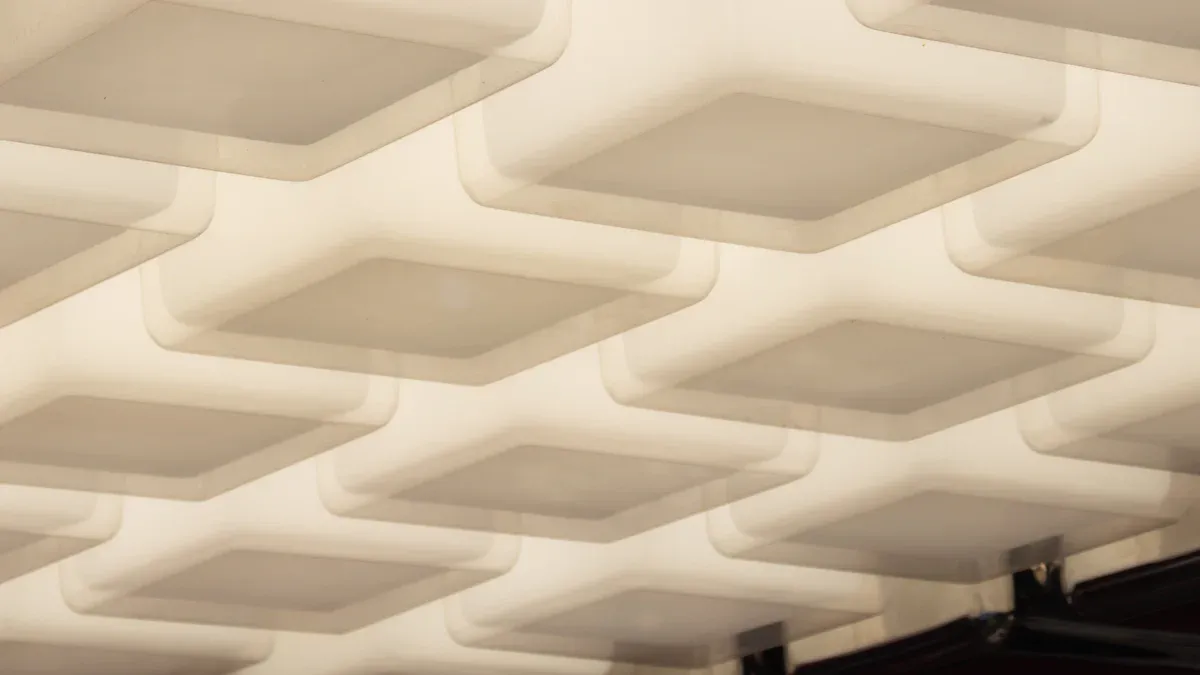
Light diffuser sheets have changed the way modern spaces look and feel. They create a soft, even glow that reduces harsh shadows and makes rooms more comfortable for daily activities. These sheets use advanced materials to enhance light transmission and minimize glare. For example, materials like Trinseo PMMA allow for high light diffusion and help reduce energy use by requiring fewer LEDs. Sunplas stands out in this field, offering optical-grade solutions that give consistent, reliable results in homes, offices, and displays.
Key Takeaways
Light diffuser sheets create a soft, even glow that enhances comfort in any space.
High-quality materials like optical-grade polystyrene improve light transmission and reduce glare.
Diffuser sheets can lower energy costs by allowing fewer or lower-wattage bulbs.
Even light distribution eliminates dark spots and shadows, making spaces feel brighter and more inviting.
Regular cleaning and maintenance ensure optimal performance and longevity.
Specialty diffusers — UV-resistant and fire-retardant options — address demanding environments.
Light Diffusion Science
What Is Light Diffusion
Light diffusion is a process that changes how light travels through a material. When light passes through a diffuser, it spreads out in many directions instead of moving in a straight line. This scattering makes the light softer and more uniform. Scientists use several principles to explain light diffusion in optical materials, including optical diffusion, haze, transmittance, surface-relief structures, phase separation, and dynamic tuning.[1]
| Concept | Description |
|---|---|
| Optical Diffusion | Redistributes light for improved uniformity and reduced glare. |
| Haze | Measures light scattering, affecting clarity and visibility. |
| Transmittance | Fraction of light passing through a material, important for optical efficiency. |
| Surface-relief Structures | Features on surfaces that manipulate light paths to enhance diffusion. |
| Phase Separation | Creates distinct regions within materials, affecting light scattering properties. |
| Dynamic Tuning | Adjusts diffuser properties in real-time using electric fields or temperature. |
How Diffuser Sheets Work
Material Properties
Light diffuser sheets use advanced materials to control how light spreads. Sunplas uses optical-grade polystyrene in its diffuser plates. These materials are chosen for their high haze levels and excellent light transmittance. A thickness tolerance of ±0.1mm ensures even lighting across the entire surface.
| Feature | Specification |
|---|---|
| Haze Level | Above 90% for uniform diffusion |
| Material Type | Acrylic (PMMA), Polycarbonate (PC), Glass |
| Thickness Tolerance | ±0.1mm for even lighting |
Light Scattering
When light hits a diffuser sheet, it scatters in multiple directions, creating a soft, non-directional glow. The sheet redistributes light evenly and minimizes hotspots. Techniques such as prismatic patterns, micro-structured surfaces, and hybrid refractive/diffusive geometries help achieve uniform illumination.
Impact on Lighting Quality
The use of light diffuser sheets leads to measurable improvements in lighting quality. Compared to direct lighting, diffuser sheets reduce hotspots by up to 95% and maintain spectral neutrality. A frosted acrylic sheet can lower PPFD transmission loss to 22–30%. Peer-reviewed trials at Wageningen University show that diffused lighting can increase leaf area index by 17% and improve harvest uniformity by 29%.
Sunplas diffuser plates deliver up to 85% light transmittance, maximizing energy efficiency and enhancing brightness.
Tip: Choosing a high-quality light diffuser sheet, such as those from Sunplas, ensures consistent, comfortable lighting in any space.
Light Diffuser Sheet Benefits
Glare Reduction
Glare can cause discomfort and reduce productivity in any space. A light diffuser sheet helps control glare by scattering light across its surface. This process softens the brightness and prevents sharp reflections. According to the Illuminating Engineering Society (IES), glare is defined as the sensation produced by luminances within the visual field that are sufficiently greater than the luminance to which the eyes are adapted, causing annoyance or loss in visual performance.[2] Sunplas diffuser plates are designed to minimize glare, making them ideal for offices, classrooms, and homes.
Even Light Distribution
Uniform lighting is important for both function and appearance. A light diffuser sheet spreads light evenly, eliminating dark spots and shadows. Three main metrics help evaluate effectiveness:
Light Transmission: Measures the percentage of light passing through the sheet, essential for maintaining brightness.
Diffusion Effectiveness: Assesses how well the sheet spreads light, helping achieve uniform lighting and reducing shadows.
Color Rendering Index (CRI): Indicates how accurately the light source displays colors — important in retail stores and art studios.
Sunplas diffuser plates offer high light transmission and excellent diffusion effectiveness, making them suitable for LED panels, architectural lighting, and display cases.
Visual Comfort and Ambiance
Comfortable lighting enhances the mood and usability of any space. A light diffuser sheet transforms harsh light into a soft glow, reducing eye fatigue and supporting a relaxing environment. In homes, diffused lighting helps create cozy living rooms and inviting bedrooms. In commercial spaces, it encourages customers to stay longer and feel at ease.
Tip: Choosing a high-quality light diffuser sheet improves both the comfort and appearance of your space. It supports productivity, relaxation, and overall well-being.
Energy Efficiency
A light diffuser sheet can make lighting systems more energy efficient. It spreads light evenly across a room, so fewer light sources are needed to achieve the same brightness. Lower-wattage LEDs can be used without sacrificing illumination, which means lower energy costs. According to the U.S. Department of Energy, widespread adoption of LED technology — paired with effective light management such as diffusers — could reduce energy consumption for lighting by 75% by 2035.[3]
Aesthetic Enhancement
Interior designers often use light diffuser sheets to improve the look and feel of a space. These sheets do more than just soften light — they add style and character to a room:
Decorative diffusers can match or complement the overall decor, making rooms look more polished.
They add warmth to living rooms or increase brightness in kitchens, changing the mood of the space.
The right diffuser improves lighting quality, which makes the environment more visually pleasing.
Advanced designs such as micro-prismatic patterns allow for creative lighting effects that suit different settings. Sunplas offers a range of options to help architects and homeowners achieve the perfect balance between function and style.
Types of Light Diffuser Sheets
Acrylic Sheets
Acrylic sheets are a popular choice for many lighting applications. They offer high optical clarity, letting a large amount of light pass through while effectively diffusing it to eliminate hot spots. Acrylic sheets are lightweight and easy to cut into different shapes and sizes. Many commercial lighting systems and display cases rely on acrylic diffusers. However, acrylic is more flammable than some other materials, so it is best used in areas where fire safety is not a primary concern.
Polycarbonate Sheets
Polycarbonate sheets are valued for their strength and durability. While their light transmission is slightly lower than acrylic, they are much more impact-resistant — suitable for schools, sports facilities, and public spaces. Polycarbonate also has a lower flammability rating, making it safer in fire-sensitive locations.
| Property | Acrylic | Polycarbonate |
|---|---|---|
| Light Transmission | High optical clarity | Good, but less than acrylic |
| Diffusion | Excellent for diffusing LED hot spots | Good, slightly less effective |
| Impact Resistance | Lower | High impact resistance |
| Flammability | More flammable | Less flammable |
| Applications | Commercial lighting, displays | High-contact and safety-critical areas |
Prismatic and Opal Options
Prismatic sheets have a patterned surface that bends and scatters light in many directions, reducing glare and spreading light evenly — commonly used in office ceilings and retail spaces. Opal sheets have a milky or frosted appearance that creates an even gentler, diffuse glow suited for homes, restaurants, and hotels. Both types can be made from acrylic or polycarbonate, giving designers flexibility in matching performance with style.
Specialty Diffusers
Specialty diffusers address the challenges of demanding lighting environments, offering features beyond standard options.
UV-Resistant
UV-resistant diffusers protect both the lighting system and the surrounding environment from harmful ultraviolet rays, preventing yellowing, fading, and damage to furniture, artwork, and sensitive equipment. They are especially useful in atriums, skylights, and display windows.
Prolonged lifespan of lighting fixtures and interior furnishings.
Reduced risk of material degradation and color fading.
Improved safety for people and products exposed to sunlight.
Fire-Retardant
Fire-retardant diffusers are engineered to resist ignition and slow the spread of flames, meeting strict fire safety standards. They are used in schools, hospitals, public buildings, and transportation hubs.
Enhanced safety by reducing fire-related risk.
Compliance with building codes and safety regulations.
Peace of mind for building owners, staff, and visitors.
Choosing the Right Light Diffuser Sheet
Assess Lighting Needs
Selecting the right diffuser begins with a careful assessment of lighting requirements. The following table outlines key criteria to consider:
| Criteria | Description |
|---|---|
| Lumen Output | Should deliver 3,000–8,000 lumens/m² for commercial applications. |
| Uniform Illumination | Achieve a max-to-min luminance ratio of 1.2:1 to 1.5:1 for professional environments. |
| Light Diffusion Quality | Must perform at defined installation depths to avoid LED dot visibility. |
| CRI & Color Consistency | Retail typically requires CRI ≥80; premium settings often specify CRI ≥90. |
| Power Efficiency | Target 100–150 lm/W for commercial projects. |
| Dimming Compatibility | Must integrate with 0–10V, PWM, or DALI control systems. |
| Heat Dissipation & Lifespan | Specify operating temp range and lumen maintenance (e.g., L70 at 50,000 hours). |
| Panel Size & Scalability | Support modular linking without visible brightness variation between sections. |
Tip: Always measure the space and define the lighting goals before selecting a diffuser. This prevents common issues like uneven brightness or color mismatch.
Match Sheet to Application
The intended use of a space greatly influences the choice of diffuser material and design:
Optical properties should match the application — display cases may need high clarity, while office ceilings benefit from strong diffusion.
Durability is important in high-traffic or industrial areas — polycarbonate offers greater impact resistance.
Offices require diffusers that reduce glare and provide even illumination to support productivity.
Retail environments benefit from lighting that creates an inviting atmosphere and highlights products.
Sunplas provides a variety of diffuser plates, including options for architectural lighting, LED panels, and specialty applications.
Light Source Compatibility
Compatibility between the light source and the diffuser sheet is essential for optimal performance. Heat resistance is crucial, especially for fixtures that generate higher temperatures. The color temperature of the diffuser material can also influence the mood and appearance of the space. Different light sources — LEDs or fluorescent lamps — emit varying levels of heat and intensity; an incompatible diffuser may cause overheating or reduced light output.
Sunplas diffuser plates are engineered to perform with a wide range of lighting technologies, maintaining consistent performance even under demanding conditions.
Tip: Always verify the compatibility of the diffuser with your lighting system to avoid performance issues and ensure a comfortable environment.
Durability and Maintenance
The material chosen for a light diffuser sheet affects how well it stands up to daily use. Acrylic sheets offer good optical clarity but are more prone to chipping. Polycarbonate sheets are much stronger and handle impacts better, making them a smart choice for high-traffic areas. Cleaning with a soft cloth and mild detergent keeps sheets clear and bright.
| Material | Durability Characteristics |
|---|---|
| Acrylic | More prone to chipping, slightly more flammable |
| Polycarbonate | Much stronger, suitable for high-impact applications |
Tip: Schedule regular cleaning and inspections to extend the life of your diffuser sheets and maintain optimal lighting quality.
Budget Considerations
| Material | Cost Level | Performance Characteristics |
|---|---|---|
| PET | Economical | Basic performance, suitable for budget projects |
| Acrylic | Moderate | Good balance of cost and performance |
| Polycarbonate | High | Superior durability and performance |
| Frosted Glass | High | Excellent light diffusion and aesthetics |
Installation and Care
Preparation Steps
Turn off the power to the lighting fixture — this prevents accidents and keeps the workspace safe.
Gather all necessary tools: screws, a screwdriver, and cleaning materials.
Clean both the fixture and the light diffuser sheet — dust or grease interferes with light distribution.
Measure the fixture and the new diffuser — accurate measurements guarantee a perfect fit.
Check the surrounding area for obstructions or hazards. Clear the workspace.
Use a sturdy, stable ladder if working in high or hard-to-reach places.
Tip: Careful preparation reduces installation errors and improves diffuser sheet performance.
Cutting and Fitting
Cutting and fitting a light diffuser sheet requires attention to material properties and tool selection. Thin, white cutting mats are easy to cut with scissors. Acrylic sheets can be brittle — use heavy-duty hand shears to prevent cracking and ensure clean edges. Always measure and mark the cutting line before cutting, and place the sheet on a flat surface to protect the material.
Securing Sheets
| Step | Best Practice |
|---|---|
| Diffuser Selection | Match to light source and environment |
| Installation | Align and mount securely, follow instructions |
| Maintenance Planning | Ensure easy access, use gentle cleaning methods |
Cleaning and Maintenance
Proper cleaning preserves the optical clarity and performance of a light diffuser sheet. Dust, fingerprints, and stains can reduce light transmission and affect illumination quality. Key cleaning tips:
Clean in a shaded area to prevent streaks from direct sunlight.
Use mild soap and lukewarm water for routine cleaning.
Use soft cloths or sponges to avoid scratches.
Test isopropyl alcohol on a small area for tough stains.
Rinse thoroughly with clean water to remove soap residue.
Dry with a lint-free cloth before reinstalling.
Avoid harsh chemicals that can damage protective layers.
Consider UV-protective sheets for areas exposed to sunlight.
Tip: Routine cleaning and careful handling help maintain the optical quality and longevity of your light diffuser sheet.
Applications in Modern Spaces
Residential Lighting
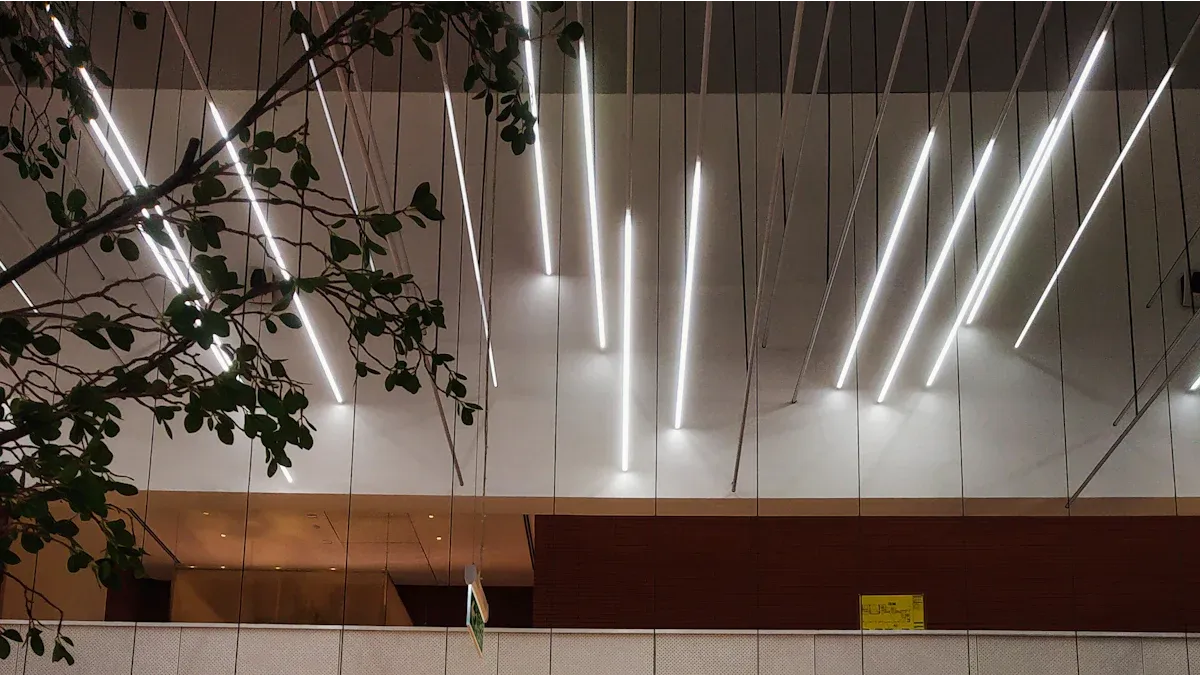
Light diffuser sheets play a key role in creating comfortable and inviting homes. Used in living rooms, bedrooms, and kitchens, they soften and distribute light evenly, reducing glare and making it easier to read or use a computer. Homeowners can choose from different styles and finishes to match their decor.
Commercial and Office Use
Lighting quality has a direct impact on productivity and well-being in offices and commercial spaces. Research demonstrates how improved lighting directly benefits the workforce:
| Study Source | Findings | Impact |
|---|---|---|
| Harvard Business School | Employees in well-lit environments showed higher productivity | +16% productivity |
| Northwestern University | Workers completed tasks faster with optimized lighting | 23% faster task completion |
| American Society of Interior Designers | Better work performance after lighting improvements | 78% of workers benefited |
| Cornell University | Better mental clarity and decision-making with improved lighting | +38% mental clarity, +41% decision-making |
| Building Research Establishment | Poor lighting linked to higher absenteeism | 19% higher absenteeism without improvement |
A light diffuser sheet helps achieve these results by spreading light evenly, reducing glare, and supporting a focused work environment. For office lighting design standards, the IES Recommended Practice for Lighting Office Spaces (ANSI/IES RP-1-24) provides comprehensive guidance on glare mitigation and uniform illuminance targets.[2]
Retail and Hospitality
Customer experience is a top priority in retail stores and hospitality venues. Light diffuser sheets improve visibility and reduce glare, making shopping and dining more pleasant. They help create a comfortable atmosphere that encourages customers to relax and stay longer. Enhanced color rendering makes products look more appealing, which can influence buying decisions.
Specialty Environments
Specialty environments demand precise control over lighting quality. A light diffuser sheet plays a vital role in these settings:
| Environment | Key Benefit of Light Diffuser Sheet |
|---|---|
| Healthcare | Softer light, reduced eye strain for patients and staff |
| Schools | Even lighting, improved student concentration |
| Offices | Minimized glare, better productivity |
| Laboratories | Consistent illumination for precision tasks |
| Art Galleries | Enhanced color accuracy, artwork protection |
| Cleanrooms | Uniform, dust-free lighting |
Tip: Choosing the right light diffuser sheet for specialty environments ensures both safety and comfort while supporting each space's specific needs.
A high-quality light diffuser sheet from Sunplas delivers reliable performance in demanding settings, helping create environments where people can focus, heal, and perform at their best.
Ready to Improve Your Lighting Quality?
Get expert guidance on selecting the right light diffuser sheet for your project — from LED panel covers to architectural and specialty applications. Our team provides customized samples, technical specs, and competitive pricing.
Request a Free Quote NowWhatsApp: +86-13961299728 | Email: info@sunplasticsheet.com
FAQ
What is a light diffuser sheet?
A light diffuser sheet is a thin panel made from materials like acrylic or polystyrene. It spreads light evenly, reduces glare, and creates a soft, comfortable glow in homes, offices, and displays.
How do I choose the right light diffuser sheet for my space?
Start by considering your lighting needs, the type of fixture, and the desired ambiance. Check compatibility with your light source. Sunplas offers customizable options to fit different applications and preferences.
Can a light diffuser sheet improve energy efficiency?
Yes. A light diffuser sheet distributes light more evenly, allowing you to use fewer or lower-wattage bulbs. This helps reduce energy consumption and lowers electricity bills.
How do I clean a light diffuser sheet?
Use a soft cloth with mild soap and lukewarm water. Avoid harsh chemicals or abrasive materials. Dry the sheet completely before reinstalling it to maintain clarity and performance.
Are light diffuser sheets safe for use in kitchens and bathrooms?
Light diffuser sheets made from moisture-resistant materials, such as optical-grade polystyrene, work well in humid environments. Always check the product specifications for suitability.
Can I cut a light diffuser sheet to fit my fixture?
Yes. Most light diffuser sheets can be trimmed using scissors or hand shears. Measure carefully and cut slowly for the best fit. Sunplas sheets are available in custom sizes for convenience.
What are the main benefits of using a light diffuser sheet?
Reduces glare and eye strain
Provides even light distribution
Enhances visual comfort and ambiance
Improves energy efficiency
Adds a modern, stylish look to any space
How long does a light diffuser sheet last?
A high-quality light diffuser sheet, like those from Sunplas, can last for many years. Regular cleaning and proper handling help extend its lifespan and maintain optimal lighting quality.
References
Nature Index — Optical Diffusion Techniques for Light Management Systems. Available at: nature.com
Illuminating Engineering Society (IES) — ANSI/IES RP-1-24: Recommended Practice: Lighting Office Spaces. Available at: store.ies.org
U.S. Department of Energy — LED Lighting. Available at: energy.gov


