




High impact polystyrene sheets offer a unique combination of strength, versatility, and affordability. These sheets, known as HIPS sheet, blend durability with easy processing, making them a top choice for both industrial manufacturing and DIY projects. The global market for high impact polystyrene reached $10.5 billion in 2023 and continues to grow due to its robust impact resistance and adaptability. Sunplas stands out as a leading producer, supplying HIPS sheet in custom thicknesses, colors, and finishes. Users rely on high impact polystyrene for applications in packaging, signage, and consumer goods. The material's printability, dimensional stability, and cost-effectiveness make HIPS sheet a smart solution for creative and practical needs.
| Advantage | Description |
|---|---|
| Ease of Processing | HIPS sheet can be easily molded, extruded, and thermoformed. |
| Cost-Effectiveness | Provides a strong balance of price and performance. |
| Durability | Offers reliable strength for demanding uses. |
| Thermal Stability | Maintains shape in moderate heat. |
| Fast Production | Supports quick turnaround for large orders. |
| Affordability | Remains accessible for both industry and hobbyists. |
Key Takeaways
High impact polystyrene sheets (HIPS) combine strength, versatility, and affordability, making them ideal for various applications.
HIPS sheets are easy to process, allowing for quick molding, extruding, and thermoforming, which benefits both industrial and DIY projects.
The material's impact resistance ensures durability, making HIPS a reliable choice for packaging, signage, and consumer goods.
HIPS sheets are customizable in thickness, color, and finish, providing flexibility for creative and practical needs.
Cost-effectiveness is a major advantage of HIPS, offering strong performance at a lower price compared to other plastics like ABS and acrylic.
HIPS is fully recyclable, supporting sustainable practices and reducing environmental impact in manufacturing.
The smooth surface of HIPS allows for excellent printability, making it suitable for vibrant graphics in advertising and displays.
When working with HIPS, proper cutting, shaping, and safety precautions ensure high-quality results and a safe fabrication process.
What is HIPS Sheet?
HIPS Sheet Definition
HIPS plastic sheets, also known as high impact polystyrene sheets, are a type of thermoplastic material. Manufacturers create these sheets by modifying polystyrene with rubber to improve toughness and impact resistance. Sunplas HIPS plastic sheets offer a reliable solution for industries that need both durability and easy processing. These sheets come in various thicknesses and colors, making them suitable for many applications. HIPS plastic sheets balance strength, printability, and cost, which makes them a popular choice for packaging, displays, and more.
HIPS plastic sheets have a density between 1.04 and 1.06 g/cm³. This balance gives them enough rigidity while keeping the weight manageable for handling and installation.
Key Properties of HIPS Sheet
Impact Resistance
HIPS plastic sheets excel at absorbing shocks. They do not crack easily when struck, which makes them ideal for products that need to withstand bumps and drops. This property is especially important in packaging and consumer goods. According to research on polystyrene materials, the rubber modification significantly enhances impact strength.
Dimensional Stability
HIPS plastic sheets maintain their shape even when exposed to changes in temperature or humidity. This stability ensures that finished products stay consistent in size and form, which is important for manufacturing and assembly.
Printability
HIPS plastic sheets provide a smooth surface that accepts inks and adhesives well. This feature allows for clear and vibrant graphics, making these sheets a top choice for advertising displays and signage.
Lightweight and Rigid
HIPS plastic sheets are lightweight, which makes them easy to transport and install. At the same time, they remain rigid enough to hold their shape during use. This combination supports both structural and decorative applications.
| Property | Description |
|---|---|
| High Impact Strength | HIPS excels at absorbing shocks without cracking, ideal for durable consumer products. |
| Rigidity | Retains a firm shape, ensuring precise control of dimensions despite impact resistance. |
| Ease of Processing | Compatible with injection molding and thermoforming, easing manufacturing workflows. |
| Good Surface Quality | Provides a smooth finish that accepts paints and adhesives, preferred for aesthetic applications. |
| Clarity (in Certain Grades) | Standard HIPS is opaque, but specialized grades offer translucency for visual applications. |
| Moderate Chemical Resistance | Resists diluted acids and bases, suitable for consumer goods without compromising safety. |
| Moisture Resistance | Exhibits moderate water resistance, maintaining stability in humid environments. |
HIPS Sheet vs Other Plastics
ABS
ABS plastic sheets are another popular thermoplastic. They offer greater impact resistance and thermal stability than HIPS plastic sheets. Industries use ABS plastic sheets for parts that require high strength and durability. These sheets can withstand harsh environments, making them suitable for automotive and electronic components. However, ABS plastic sheets are more expensive and require specialized equipment for precise cutting.
Acrylic
Acrylic sheets are known for their clarity and shatter resistance. They are more brittle than HIPS plastic sheets and can crack if not handled carefully. Acrylic costs more than HIPS plastic sheets but allows for intricate designs. Manufacturers use acrylic when they need a clear, glass-like appearance.
PVC
PVC is a thermoplastic with good durability and moderate impact resistance. It is more flexible than HIPS plastic sheets and absorbs impacts better than acrylic. PVC is easy to cut and machine, which makes it suitable for high-speed production. It offers good dimensional stability and is often used in construction and signage.
Tip: When choosing between HIPS plastic sheets, ABS plastic sheets, acrylic, and PVC, consider the balance of cost, durability, and processing needs for your project.
Need Custom HIPS Sheets for Your Project?
Get expert consultation and customized HIPS solutions tailored to your specific requirements. Our team is ready to help you choose the right specifications, thickness, and finish.
Request a Quote NowBenefits of Using HIPS Sheet
Durability and Impact Resistance
HIPS sheets deliver outstanding durability, making them a preferred material for demanding environments. The high impact strength of these sheets allows them to absorb shocks and resist cracking, even when subjected to rough handling. Many industries rely on this strength and durability to protect products during shipping, storage, and everyday use. Sunplas HIPS sheets maintain their structural integrity over time, which ensures that finished products remain reliable and safe. The combination of high impact strength and toughness means that HIPS can withstand repeated stress without losing performance. This durability also extends the lifespan of items made from HIPS, reducing the need for frequent replacements.
Versatility and Customization
HIPS sheets offer remarkable versatility, adapting to a wide range of applications. Manufacturers can easily customize these sheets to meet specific project requirements. Sunplas provides options for thickness, color, and surface finish, allowing users to select the best combination for their needs.
| Thickness Options | Color Options | Finish Options |
|---|---|---|
| 0.3 mm | White | Matte |
| 0.5 mm | Black | Glossy |
| 0.8 mm | Custom Colors | Textured |
| 1.0 mm | Natural | N/A |
| 1.5 mm | ||
| 2.0 mm |
Users can choose from a variety of thicknesses, ranging from 0.3 mm to 2.0 mm or more. Color options include standard choices like white and black, as well as custom colors for branding or design purposes. Surface finishes such as matte, glossy, or textured help achieve the desired look and feel. This level of customization supports creative freedom and ensures that HIPS sheets fit seamlessly into different projects. The versatility of HIPS makes it suitable for packaging, signage, displays, and more.
Cost-Effectiveness
One of the main benefits of using HIPS is its cost-effectiveness. HIPS sheets provide a strong balance between price and performance. Compared to alternative plastics, HIPS offers significant savings without sacrificing quality.
| Material | Price per kg |
|---|---|
| HIPS | $1.20 |
| Polystyrene | $1.05 |
| ABS | $1.45 |
HIPS sheets cost less than ABS while delivering excellent durability and printability. This affordability makes HIPS an attractive choice for both large-scale manufacturing and smaller DIY projects. Companies can reduce material costs and still benefit from the strength and durability that HIPS provides. The cost-effectiveness of HIPS supports efficient production and helps businesses stay competitive in their markets.
Note: The benefits of using HIPS extend beyond price and performance. HIPS is recyclable, which adds value for companies seeking sustainable solutions. The recyclability of HIPS sheets supports environmental goals and reduces waste.
Easy Fabrication and Thermoforming
Manufacturers and designers value HIPS for its straightforward fabrication process. This material cuts, drills, and shapes with standard tools, making it accessible for both industrial and DIY projects. HIPS responds well to thermoforming, a process that uses heat to mold plastic into new shapes. The material softens at moderate temperatures, allowing users to create complex forms without cracking or losing strength.
| Source | Temperature Range |
|---|---|
| Interstate AM | 300°F to 350°F |
| Toolcraft | 120°C to 140°C |
Most HIPS sheets do not require pre-drying before thermoforming. However, if the material contains recycled content or has been stored in high humidity, drying at 75°C for 1–2 hours may improve results. This step helps prevent surface defects and ensures a smooth finish.
Key advantages of working with HIPS include:
No need for specialized equipment for cutting or forming.
Fast heating and cooling cycles, which speed up production.
Consistent results across different thicknesses and sizes.
Sunplas HIPS sheets offer excellent formability, supporting a wide range of manufacturing needs. Their smooth surface and reliable thickness help users achieve precise, repeatable shapes.
Printability and Surface Options
HIPS stands out for its superior printability. The material's smooth surface accepts inks and adhesives, producing sharp graphics and vibrant colors. This feature makes HIPS a top choice for signage, displays, and packaging that require eye-catching visuals.
| Printing Method | Surface Finish |
|---|---|
| Screen Printing | Smooth Matte |
| Digital Printing | Smooth Matte |
Screen printing and digital printing both work well with HIPS, especially when using a smooth matte finish. This combination ensures that images and text appear crisp and clear. Sunplas offers HIPS sheets in various finishes, including matte for non-glare applications and glossy for a premium look. Custom textures are also available for specialized projects.
Users can select from a range of colors and finishes to match branding or design requirements. The versatility in surface options allows HIPS to adapt to different visual and functional needs.
Environmental Benefits
HIPS provides several environmental advantages. The material is fully recyclable, which helps reduce waste and supports sustainable manufacturing practices. Many facilities collect and process used HIPS sheets, turning them into new products or raw materials. According to the Association of Plastic Recyclers, polystyrene recycling programs have grown significantly in recent years.
Sunplas manufactures HIPS sheets with a focus on resource efficiency. The production process minimizes scrap and energy use, contributing to a lower environmental footprint. Customers can request sheets with recycled content for projects that prioritize sustainability.
Key environmental benefits of HIPS include:
Recyclability, which supports circular economy goals.
Reduced need for virgin materials when using recycled HIPS.
Lower energy requirements during fabrication and forming.
By choosing HIPS, companies and individuals support responsible material use and help protect the environment. The combination of durability, recyclability, and efficient processing makes HIPS a smart choice for eco-conscious projects.
Common Applications of HIPS
High impact polystyrene sheets serve a wide range of industries due to their unique combination of strength, printability, and cost-effectiveness. The following sections explore the most common applications of HIPS, highlighting how Sunplas sheets meet the needs of modern manufacturing, design, and construction.
Packaging Applications
HIPS sheets play a vital role in the packaging industry. Their durability and versatility make them a preferred material for protecting and displaying products.
Food Packaging
Manufacturers use HIPS sheets to create food containers, trays, and custom inserts. These applications help keep food safe during transport and storage. The smooth surface of HIPS allows for clear grading and product visibility, which is important for both retailers and consumers. Sunplas sheets meet strict hygiene standards, making them suitable for direct contact with food. Companies often choose HIPS for meat and poultry trays, egg cartons, and other packaging that requires both strength and safety.
Food containers
Trays for meat, poultry, and produce
Custom protective inserts for shipping
Egg cartons
Clear lids for product visibility
HIPS sheets also provide cushioning for delicate items. Their impact resistance helps prevent damage during shipping and handling.
Blister Packs
Blister packs represent another common application of HIPS plastic sheets. These packs use a clear or colored HIPS sheet to form a protective bubble over products. The material's rigidity and printability allow for attractive, tamper-evident packaging. Sunplas sheets can be thermoformed into precise shapes, making them ideal for packaging electronics, toys, and small hardware.
CD and DVD cases
Blister packaging for consumer goods
Foam packaging peanuts for cushioning
HIPS sheets offer a cost-effective solution for high-volume packaging needs. Their lightweight nature reduces shipping costs, while their strength ensures products arrive safely.
Signage and Displays
HIPS sheets excel in signage and display applications. Their smooth surface and excellent printability make them a top choice for advertising and point-of-sale displays.
Advertising
Companies rely on HIPS sheets for indoor and outdoor advertising. The material accepts vibrant inks, producing sharp graphics that attract attention. Sunplas sheets come in matte and glossy finishes, allowing designers to select the best look for each campaign. HIPS stands out for its durability, resisting scratches and impacts in busy environments.
| Property | High Impact Polystyrene (HIPS) | Other Materials (GPPS, Polyethylene, Polycarbonate) |
|---|---|---|
| Printability | Excellent | Limited (GPPS, PE) |
| Durability | High | Lower (GPPS, PE) / Higher cost (Polycarbonate) |
| Cost-effectiveness | Cost-effective | More expensive (Polycarbonate) |
| Ideal for | Signage and graphics | Not suitable for heavy handling (GPPS, PE) |
HIPS sheets support a variety of printing methods, including screen and digital printing. This flexibility makes them suitable for banners, posters, and promotional displays.
Point-of-Sale
Retailers use HIPS sheets for point-of-sale displays that showcase products and promotions. The material's rigidity allows for free-standing signs and display stands. Sunplas sheets can be cut and shaped into custom forms, supporting creative retail environments. HIPS also resists wear from frequent handling, maintaining a professional appearance over time.
Indoor signage
Countertop displays
Shelf talkers
Promotional stands
The cost-effectiveness of HIPS makes it possible to update displays regularly without exceeding budgets.
Prototyping and Model Making
Designers and engineers value HIPS sheets for prototyping and model construction. The material's easy fabrication and reliable performance support rapid development cycles.
Architectural Models
Architects use HIPS sheets to build scale models of buildings and landscapes. The sheets cut cleanly and bond easily, allowing for precise details. HIPS provides the rigidity needed for structural elements, while its lightweight nature simplifies transport and presentation. Sunplas offers sheets in various thicknesses and colors, giving architects flexibility in their designs.
Scale models for construction planning
Mock-ups for client presentations
HIPS sheets help teams visualize projects before full-scale construction begins.
Product Prototypes
Engineers and inventors use HIPS sheets to create product prototypes. The material's formability allows for quick adjustments and modifications. HIPS supports the development of enclosures, panels, and other components. Sunplas sheets provide consistent quality, ensuring that prototypes match final production standards.
Prototypes for consumer goods
Enclosures for electronics
Panels for testing and evaluation
HIPS sheets enable fast, cost-effective prototyping, reducing time to market for new products.
Note: The common applications of HIPS extend across packaging, signage, and construction. Sunplas continues to support innovation in these fields with reliable, customizable sheets.
Medical and Laboratory Uses
High impact polystyrene sheets play a vital role in medical and laboratory environments. Their unique properties support a wide range of applications where safety, cleanliness, and reliability matter most.
Disposable Devices
Many medical facilities use HIPS sheets to produce disposable devices. These items include diagnostic tools, sample trays, and test cassettes. The material's impact resistance and smooth surface help maintain hygiene and prevent contamination. Manufacturers choose HIPS for its ability to withstand sterilization methods such as gamma irradiation and ethylene oxide. This ensures that devices remain safe for patient use.
| Application Type | Description |
|---|---|
| Diagnostic Devices | Used in laboratory consumables and diagnostic tools due to durability and chemical stability. |
| Immunoassay Platforms | Standard for ELISA and RIA microplates, supporting biomolecule immobilization. |
| Cell Culture Vessels | Used for flasks and plates, often treated to promote cell adhesion. |
| Sterilization Methods | Compatible with gamma irradiation and ethylene oxide sterilization. |
These applications show how HIPS supports both single-use and reusable medical products. The material's versatility helps laboratories maintain strict quality standards.
Lab Equipment
Laboratories rely on HIPS sheets for equipment such as pipette racks, storage boxes, and sample holders. The material's dimensional stability ensures that equipment maintains its shape during repeated use. HIPS also resists many chemicals found in laboratory settings, which helps protect sensitive samples. Sunplas offers HIPS sheets in custom sizes and finishes, making them suitable for specialized lab equipment.
Tip: HIPS sheets can be easily cut and shaped, allowing labs to create custom organizers and tools for unique research needs.
Looking for High-Quality HIPS Sheets?
Contact our expert team today to discuss your requirements and get a custom quote. We offer various thicknesses, colors, and finishes to match your specific needs.
Get Your Free ConsultationConsumer Goods and Appliances
HIPS sheets appear in many everyday products. Their durability and ease of processing make them a popular choice for manufacturers of consumer goods.
Toys
Toy makers use HIPS sheets to create safe, colorful, and durable toys. The material's impact resistance protects toys from breaking during play. HIPS also accepts bright colors and smooth finishes, which appeal to children and parents. Many building blocks, action figures, and educational kits use HIPS as a core material.
Building blocks
Action figures
Educational kits
These applications show how HIPS supports creativity and safety in the toy industry.
Household Appliances
Manufacturers use HIPS sheets for the outer casings of household appliances. The material's rigidity and lightweight nature make it ideal for vacuum cleaner housings, refrigerator liners, and air conditioner panels. HIPS resists everyday bumps and scratches, helping appliances maintain a clean appearance. Sunplas provides HIPS sheets in custom colors and finishes to match modern home designs.
Appliance casings
Refrigerator liners
Air conditioner panels
Small kitchen device covers
These applications demonstrate how HIPS supports both function and style in household products.
Automotive and Electronics
The automotive and electronics industries depend on HIPS sheets for many interior and exterior components. The material's strength, formability, and cost-effectiveness make it a top choice for these demanding fields.
| Industry | Application Examples |
|---|---|
| Automotive | Door panels, dashboard assemblies, decorative parts |
| Electronics | Computer casings, electrical and consumer electronics housings |
Interior Components
Automotive manufacturers use HIPS sheets for door panels, dashboard assemblies, and decorative trims. The material's impact resistance and dimensional stability help these parts withstand daily use. HIPS also allows for custom textures and colors, which enhance the look and feel of vehicle interiors.
Housings
Electronics companies rely on HIPS sheets for the housings of computers, remote controls, and other devices. The material protects sensitive components from shocks and dust. HIPS supports precise molding, which ensures that housings fit tightly and look professional. Sunplas offers HIPS sheets in a range of thicknesses to meet the needs of both automotive and electronics applications.
Note: The versatility of HIPS allows it to serve as a reliable material for many applications, from medical devices to automotive interiors. Its combination of strength, printability, and cost-effectiveness continues to drive innovation across industries.
Working with HIPS Sheet
Cutting and Shaping
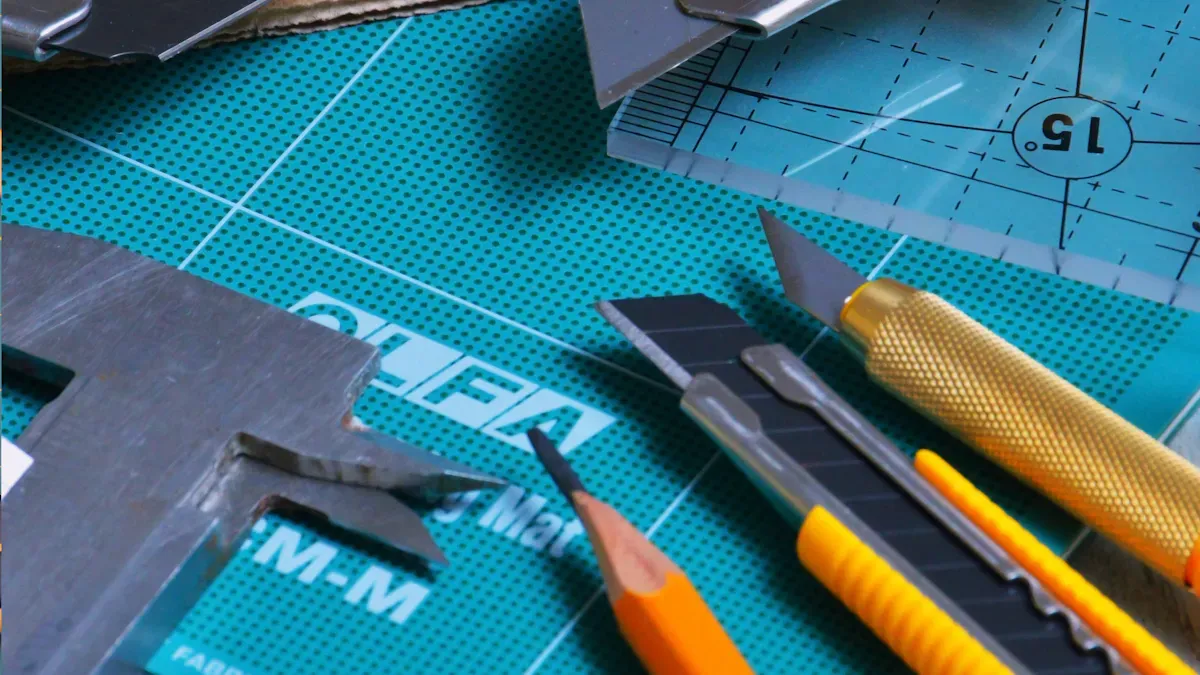
Cutting and shaping HIPS sheets is a straightforward process that supports the ease of fabrication. Many users choose HIPS because it allows for both manual and machine-based methods. For small projects, utility knives and hot wire cutters provide precise control. These tools work well for thin sheets and detailed cuts. For thicker HIPS sheets, power tools such as jigsaws or table saws deliver clean, straight edges.
Before starting, users should measure and mark the sheet with a ruler or T-square and a marker or pencil. This step ensures accuracy and reduces waste. After cutting, sandpaper helps smooth the edges for a professional finish. The following list summarizes essential tools for cutting and shaping HIPS:
Utility knives
Hot wire cutters
Jigsaws or table saws
Rulers or T-squares
Markers or pencils
Sandpaper
Proper planning and attention to sheet thickness help achieve the best results. Always maintain good ventilation when using heated tools. Protective gloves, masks, and eye protection keep users safe during fabrication.
Thermoforming Techniques
Thermoforming is a popular method for shaping HIPS sheets due to their ease of fabrication. This process involves heating the sheet until it becomes pliable, then forming it over a mold. Sunplas HIPS sheets respond well to this technique, making them ideal for complex shapes and custom designs.
Best practices for thermoforming HIPS include:
Design molds with draft angles of 3-5 degrees for male molds and 1-3 degrees for female molds. This approach allows easy removal and prevents distortion.
Maintain consistent wall thickness to avoid weak spots. Plug assists and rounded corners help distribute material evenly.
Pre-dry HIPS sheets if moisture is present. This step prevents defects like bubbles or warping during heating.
Reinforce parts with ribs and gussets for added strength.
Optimize heating and cooling cycles to reduce defects and improve efficiency.
Thermoforming supports the ease of fabrication by allowing quick production of custom parts. The process works well for both small and large-scale projects, making HIPS a versatile choice.
Bonding and Joining
Bonding and joining HIPS sheets is an important part of fabrication. Users can join HIPS using adhesives, solvents, or mechanical fasteners. For most applications, solvent welding creates strong, seamless joints. Apply the solvent to the edges, press the sheets together, and allow them to set. This method works well for constructing boxes, trays, or display stands.
Adhesives designed for plastics also bond HIPS effectively. Mechanical fasteners such as screws or rivets provide additional support for larger assemblies. When joining HIPS, ensure surfaces are clean and dry for the best adhesion. The ease of fabrication extends to bonding, as HIPS accepts a variety of joining methods without special preparation.
Tip: Test adhesives or solvents on a small area before full assembly to ensure compatibility and appearance.
The combination of easy cutting, shaping, thermoforming, and joining makes HIPS a top material for projects that require flexibility and efficiency in fabrication.
Finishing and Printing
Finishing and printing play a key role in the final appearance and durability of high impact polystyrene sheets. Sunplas HIPS sheets offer a smooth surface that supports a wide range of finishing techniques. These methods help enhance both the look and the lifespan of the finished product.
| Technique | Benefits |
|---|---|
| Lamination | Increases product life, improves visual appeal, adds water resistance, and boosts sturdiness. |
| UV Varnish | Provides a glossy finish, protects against scratches and fading, and enhances visual interest. |
| Embossing/Debossing | Creates textured impressions, improves tactile experience, and raises perceived quality. |
| Foil Stamping | Adds a metallic finish, gives a luxury feel, and acts as a protective coating for durability. |
Printing on HIPS sheets is straightforward. The material accepts screen printing and digital printing, which produce sharp images and vibrant colors. Many designers choose matte or glossy finishes to match the needs of their projects. For applications like signage, displays, or packaging, these finishing options help products stand out and last longer.
HIPS sheets also work well with 3D printing for creating custom graphics or raised features. This compatibility allows for creative designs and unique branding elements. When selecting a finishing or printing method, users should consider the environment where the product will be used and the desired visual effect.
Safety Tips
Working with HIPS sheets requires attention to safety. Proper precautions help prevent injuries and ensure a smooth fabrication process. The following tips support safe handling and processing:
Wear protective gloves to avoid cuts from sharp tools and burns from heated wires.
Use a dust mask or respirator when cutting or sanding, as power tools can create fine particles.
Ensure good ventilation when using heated tools or adhesives to avoid inhaling fumes.
Keep the work area clean and free of clutter to reduce the risk of accidents.
Store HIPS sheets flat and away from direct sunlight to prevent warping or damage.
Tip: Always read and follow the safety instructions provided with tools and materials. Taking time to prepare and use the right equipment helps maintain a safe workspace.
By following these safety guidelines, users can work confidently with HIPS sheets and achieve high-quality results.
Choosing HIPS Sheet for Your Project
Thickness and Size Options
Selecting the right thickness and size for high impact polystyrene is important for successful applications. Thinner HIPS work well for lightweight packaging and display panels. Thicker HIPS provide extra strength for structural uses and heavy-duty parts. Leading manufacturers, such as Sunplas, offer a wide range of thicknesses and sizes to fit different project needs.
| Thickness Options | Size Options |
|---|---|
| 0.5mm | 1220 x 2440mm (4 x 8 foot) or custom |
| 2mm | 1220 x 2440mm (4 x 8 foot) or custom |
| 3mm | 1220 x 2440mm (4 x 8 foot) or custom |
| 6mm | 1220 x 2440mm (4 x 8 foot) or custom |
| 0.6mm | Standard Size: 1220 x 2440mm |
| 6.0mm | Custom Size |
| 0.6mm | Max Width: 1900mm |
| 8mm | Length: No limit |
Sunplas can supply HIPS in both sheets and rolls. Custom sizes are available for unique applications. Users should consider the final use, weight requirements, and installation method when choosing thickness and size.
Tip: For large signage or panels, select HIPS with a greater width or length to reduce seams and improve appearance.
Color and Surface Finish
Color and surface finish play a key role in the look and function of HIPS. Many commercial applications require specific colors for branding or design. Sunplas offers a variety of color options, including standard choices and custom colors.
| Color Options | Surface Finish |
|---|---|
| White | Smooth Matte |
| Black | Smooth Matte |
Smooth matte finishes reduce glare and provide a clean look. These finishes work well for displays, packaging, and advertising. Custom colors and textures are also available for special applications. When selecting HIPS, users should match the color and finish to the project's visual and functional needs.
Note: Matte finishes help reduce reflections in bright environments, making them ideal for signage and point-of-sale displays.
Supplier and Customization
Choosing the right supplier ensures quality and reliability for HIPS. Several factors help users make the best choice:
Industry Experience and Reputation: A supplier with a strong history and positive client feedback often delivers consistent results.
Product Quality and Certifications: Look for suppliers who follow strict quality control and hold certifications such as ISO 9001.
Range of Products and Customization Options: A wide selection and the ability to customize thickness, color, and finish support many applications.
Technical Expertise and Support: Suppliers who offer technical advice can help solve design or production challenges.
Supply Chain Efficiency and Delivery Capabilities: Reliable delivery ensures projects stay on schedule.
Pricing Structure and Transparency: Clear pricing helps users plan budgets and avoid surprises.
Sustainability Practices: Suppliers with eco-friendly practices support responsible manufacturing.
Customer Service and Communication: Responsive support makes the ordering process smooth and efficient.
Sunplas stands out by offering custom HIPS solutions, fast delivery, and strong technical support. Their experience and commitment to quality make them a trusted partner for many industries.
Callout: Always request samples or technical data sheets before placing large orders. This step helps confirm that the HIPS meet all project requirements.
Cost vs Performance
Selecting the right material often comes down to balancing cost and performance. High impact polystyrene, or HIPS, stands out in this regard. Many industries choose HIPS because it delivers reliable strength and versatility at a lower price point than other plastics. This balance makes it a smart choice for projects that require both durability and affordability.
The global market for HIPS reflects its popularity. In 2023, the HIPS market reached a value of about USD 9.5 billion. Experts expect this figure to grow to nearly USD 15.7 billion by 2032. The projected annual growth rate is 5.7% from 2024 to 2032. This steady increase shows that more manufacturers and designers recognize the value HIPS brings to their applications.
When comparing cost and performance, HIPS offers several advantages:
HIPS provides strong impact resistance, which protects products from damage during use or transport.
The material's versatility allows it to serve many industries, from packaging to automotive.
Its lower cost compared to alternatives like ABS or acrylic helps companies manage budgets without sacrificing quality.
HIPS is easy to machine and form, which reduces labor and production costs.
The material's printability supports high-quality graphics, making it ideal for displays and signage.
Note: HIPS combines toughness with cost-effectiveness, making it suitable for both high-volume manufacturing and custom projects.
Many users find that HIPS meets their needs for both performance and price. For example, packaging companies use HIPS to create protective trays and inserts that must withstand rough handling. At the same time, the material's affordability keeps production costs low. In the advertising industry, HIPS supports vibrant printed displays that look professional but remain budget-friendly.
The machinability of HIPS also adds to its value. Manufacturers can cut, shape, and thermoform HIPS using standard equipment. This flexibility means less investment in specialized tools and faster turnaround times for projects.
When evaluating materials, decision-makers should consider both the upfront cost and the long-term performance. HIPS delivers a unique combination of impact resistance, versatility, and cost savings. This balance explains why so many industries continue to rely on HIPS for a wide range of applications.
HIPS offers a unique blend of strength, versatility, and sustainability for modern manufacturing. The table below highlights the main benefits and applications:
| Benefit/Application | Description |
|---|---|
| High Impact Resistance | Protects products in packaging and automotive components. |
| Thermal Insulation Properties | Supports energy-efficient construction. |
| Moldability | Enables complex designs in consumer goods. |
| Recyclability and Sustainability | Aligns with eco-friendly manufacturing trends. |
Sunplas provides HIPS in custom sizes, colors, and finishes, making it a reliable solution for diverse needs. Those interested in using HIPS can request samples, discuss customization, or seek expert advice for their next project.
Request a quote or sample from Sunplas.
Explore customization options for HIPS.
Contact Sunplas for technical support or more information.
FAQ
What is high impact polystyrene (HIPS) sheet used for?
High impact polystyrene sheets serve many industries. They appear in packaging, signage, displays, prototypes, toys, and appliance parts. Their strength and printability make them a top choice for both commercial and DIY projects.
Can HIPS sheets be recycled?
Yes, HIPS sheets are fully recyclable. Many recycling centers accept them. Recycled HIPS can become new products, which helps reduce waste and supports environmental goals.
How do you cut HIPS sheets?
Users can cut HIPS sheets with utility knives for thin pieces or power tools for thicker sheets. Always mark the cut line first. Sand the edges after cutting for a smooth finish.
Are HIPS sheets safe for food contact?
Manufacturers often produce HIPS sheets that meet food safety standards. These sheets work well for trays, containers, and packaging that touch food. Always check with the supplier for certification.
What thicknesses are available for HIPS sheets?
HIPS sheets come in many thicknesses, usually from 0.6 mm to 8 mm. Sunplas offers custom thickness options to match different project needs.
Can you print directly on HIPS sheets?
Yes, HIPS sheets accept screen and digital printing. Their smooth surface allows for sharp images and vibrant colors. This feature makes them ideal for signs and displays.
How do you join or bond HIPS sheets?
Users can bond HIPS sheets with solvent welding, adhesives, or mechanical fasteners. Clean the surfaces before joining. Test the method on a small area for best results.
What is the maximum size available for HIPS sheets?
Sunplas can supply HIPS sheets up to 1900 mm wide. Lengths can be customized. Sheets and rolls are both available for different manufacturing needs.
Ready to Start Your HIPS Project?
Get in touch with our team for professional guidance, custom solutions, and competitive pricing. We're here to help bring your ideas to life with premium quality HIPS sheets.
Contact Us Today

